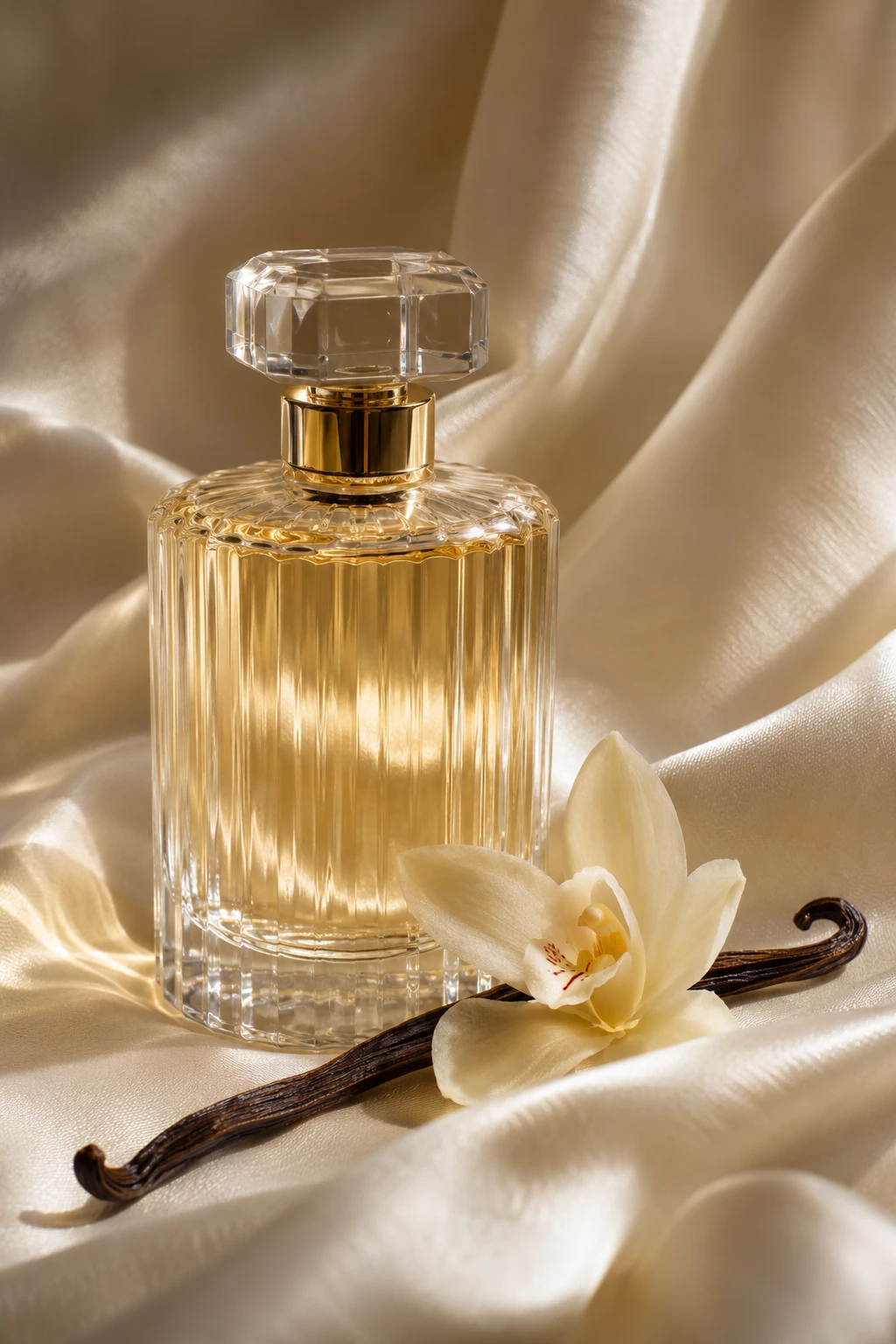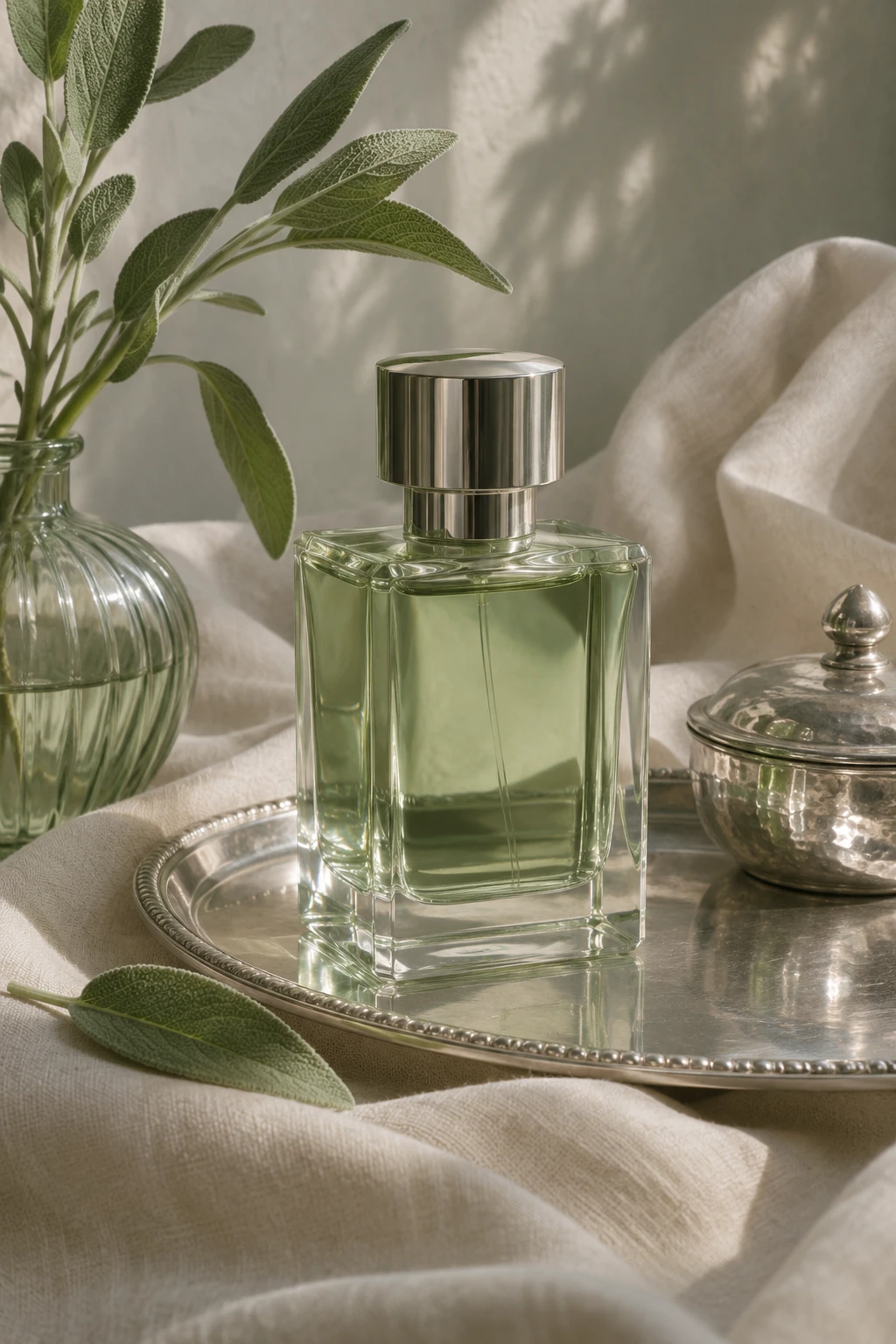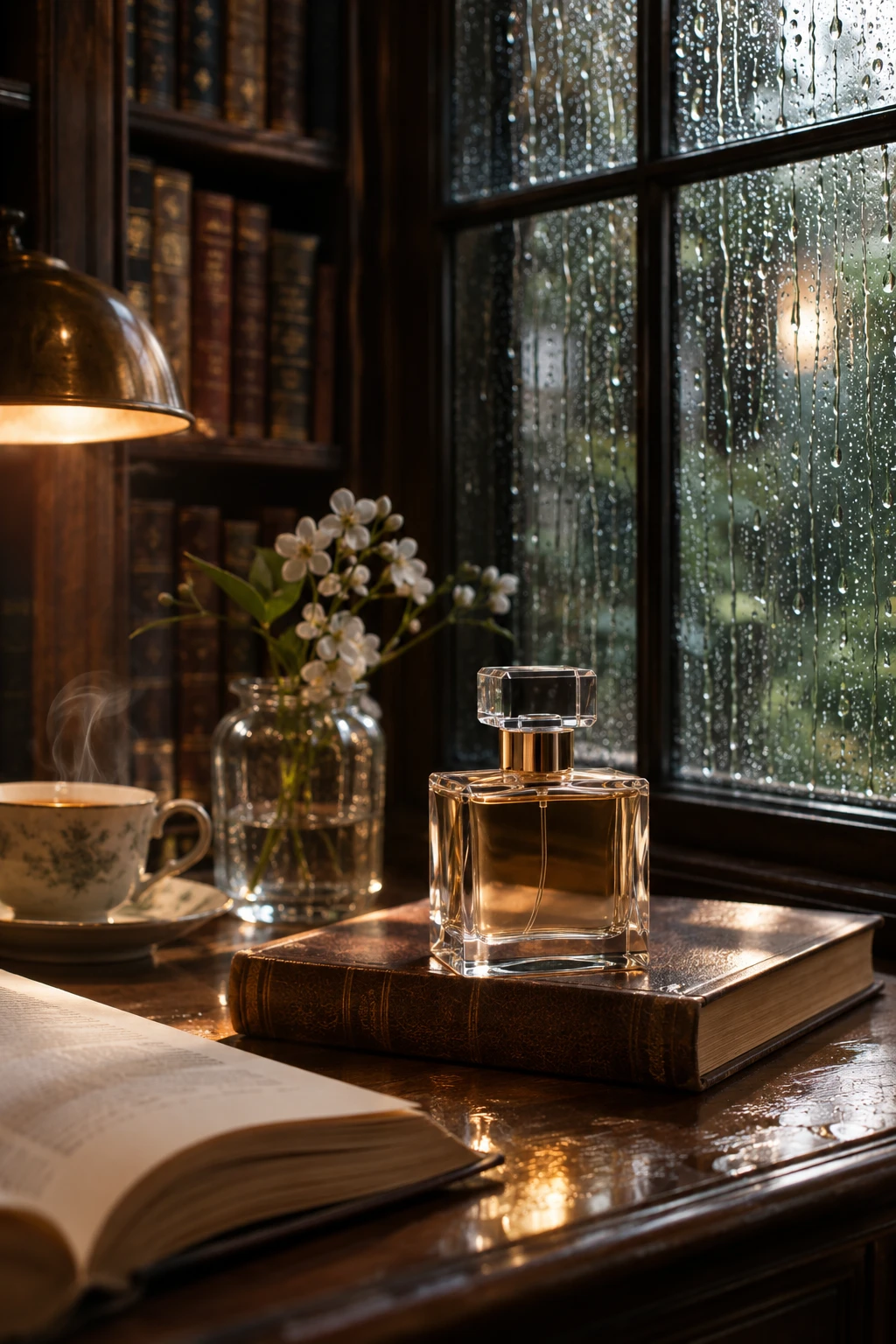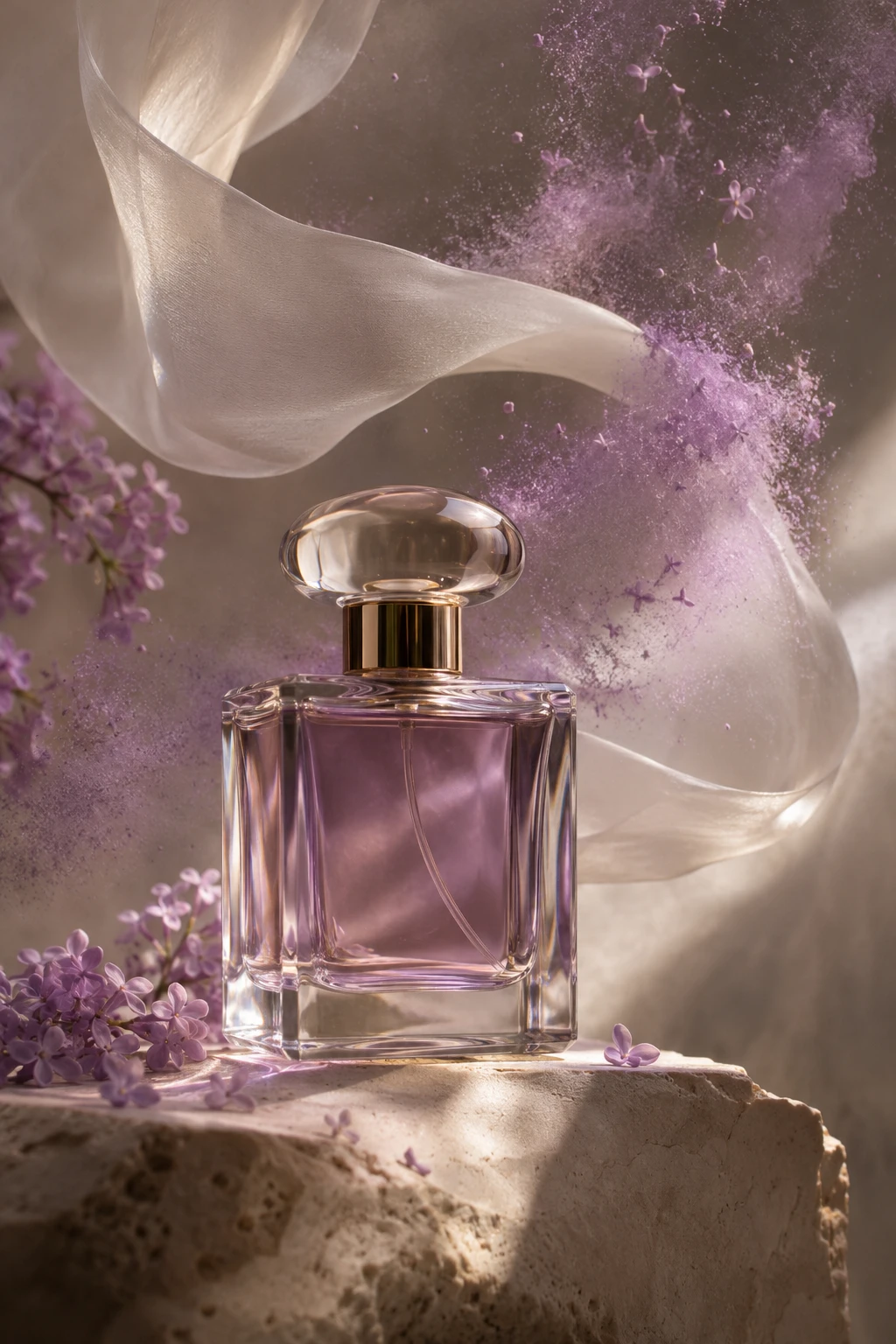
A scent leaves an impression through timing as much as through character. Something can feel bright at the start, dense for a moment and almost transparent when you return to it. These ten visual experiments give those changes a shape using silk, glass, shadow and space. An unbranded bottle remains in each frame to give the eye a fixed point while other materials appear to move around it. Some of the scenes rely on an impossible suspension or an unlikely reflection. The photographs are imagined, but the lighting and textures are designed to feel tangible. Watch which detail you notice first and which one remains after you look away.
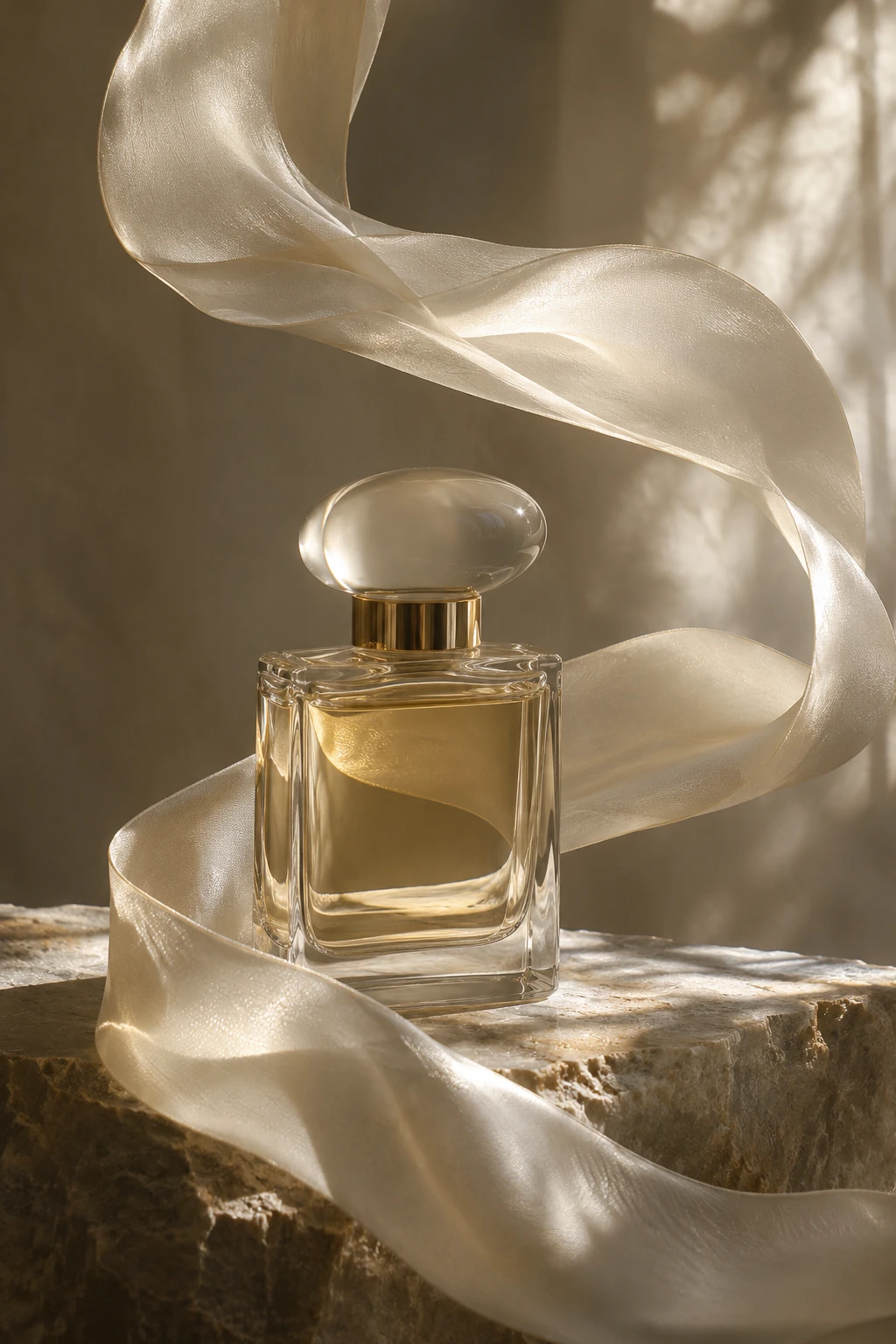
A ribbon of scent
An ivory ribbon appears to turn in the air beside the bottle. Its width changes as the fabric twists, so the eye can trace a path through the frame. Bring the camera close enough to see where the two surfaces meet. The small changes in brightness around that junction are what give this setting its depth. That small contrast gives the composition a clear place for the eye to rest.
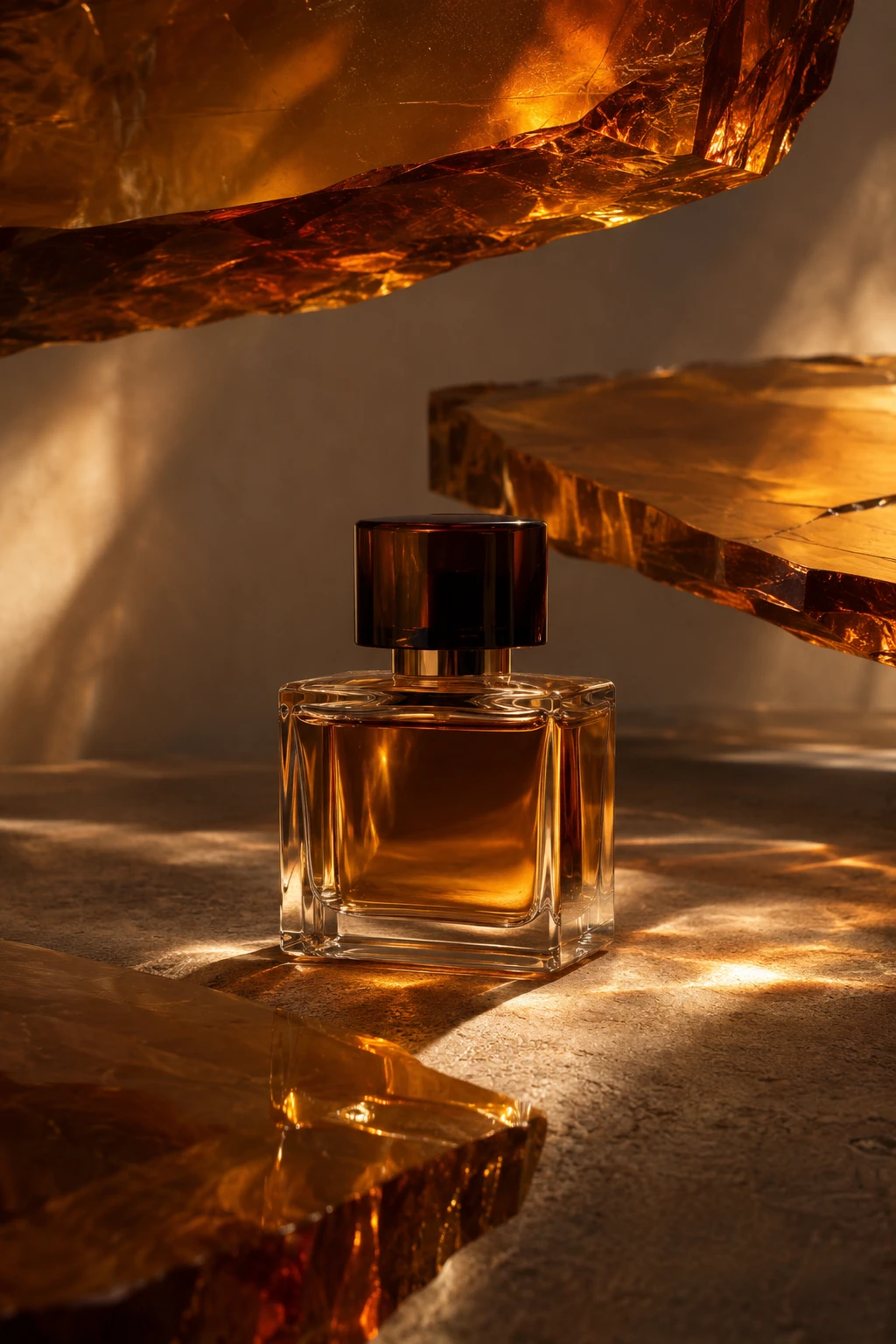
Weight of amber
Amber slabs float low and carry a sense of weight through their broad edges. Warm light travels only a short distance before the glass darkens it. Let the darker material occupy more of the frame than the bottle. A clear highlight at the shoulder will carry the eye back from the shadow without flattening it. The glass picks up a faint reflection from the surrounding material.
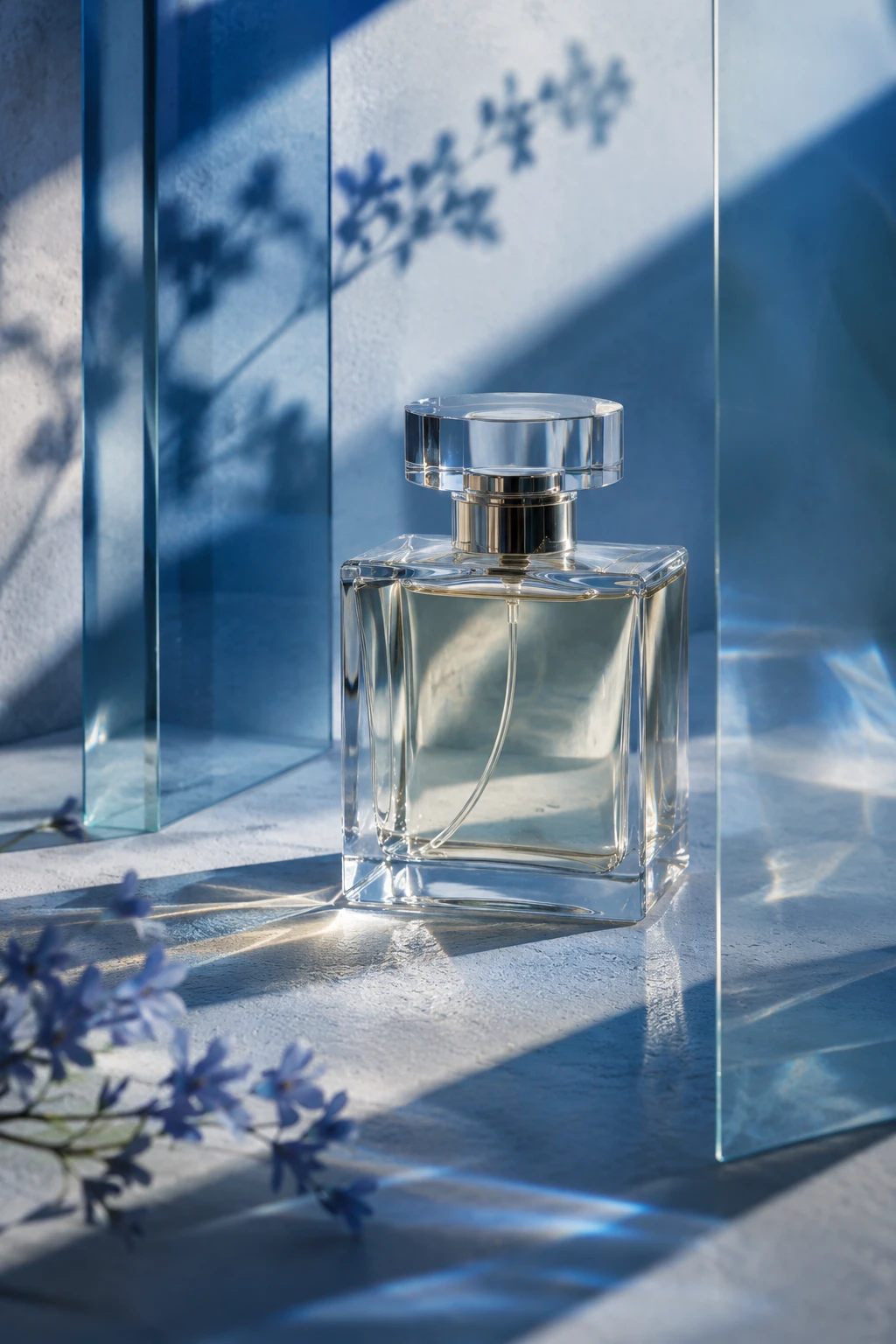
Cool opening
Clear planes cast blue shadows around the bottle. Their hard edges make the opening feel quick, with enough open space for the light to travel. A slightly off-center composition gives the material room to register. Leave some visible space beside the bottle so the eye can take in the texture at its own pace. A narrow strip of shade gives the main object a more distinct outline.
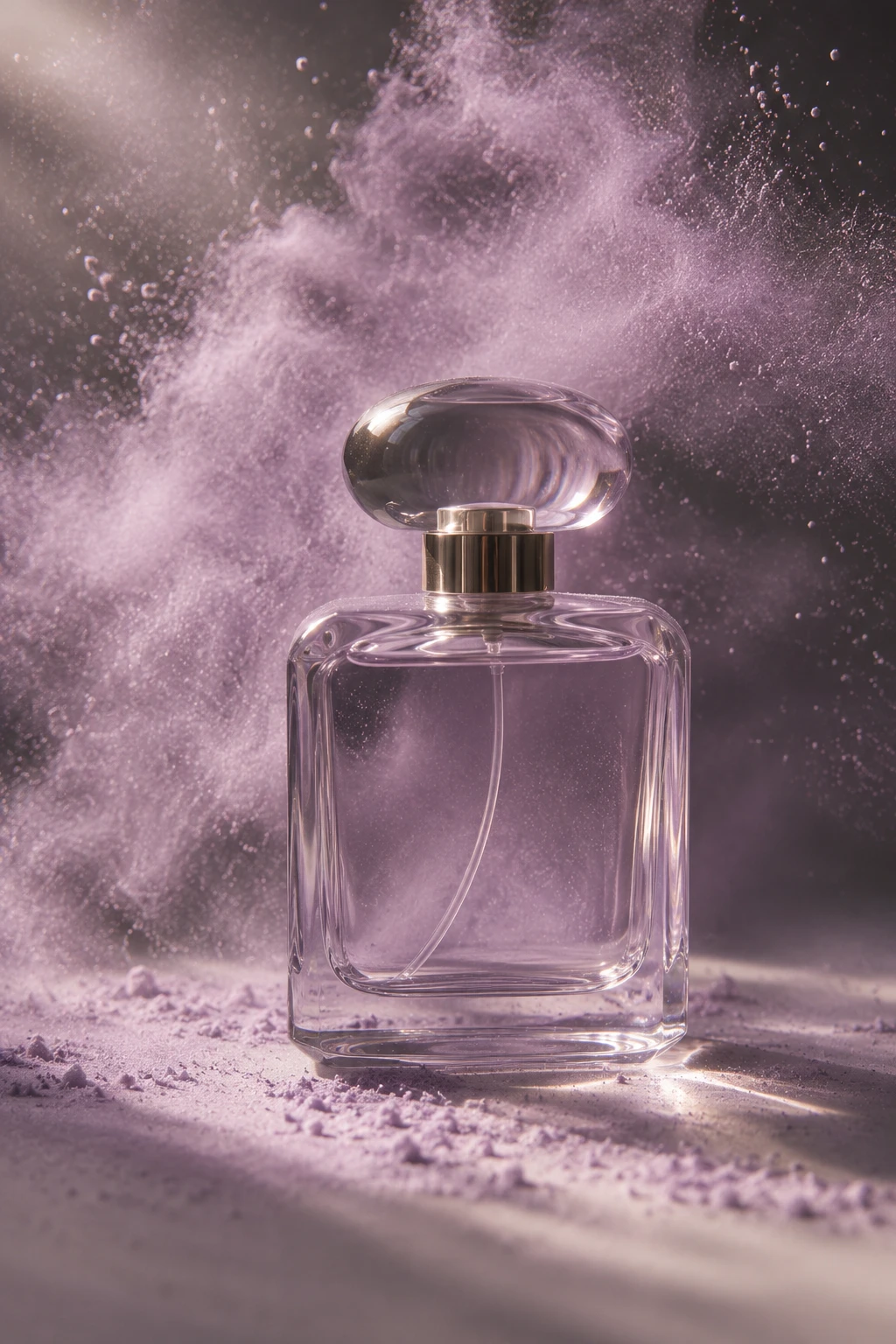
Powder in suspension
Lilac dust hangs behind the bottle in uneven density. The suspended particles suggest a texture that can change between soft and almost chalky. Keep the objects at different distances from the light. The nearer detail reads clearly, and the softer edge behind it gives the scene the feel of a real room. The surrounding colors leave room for the clear glass to catch a softer light.
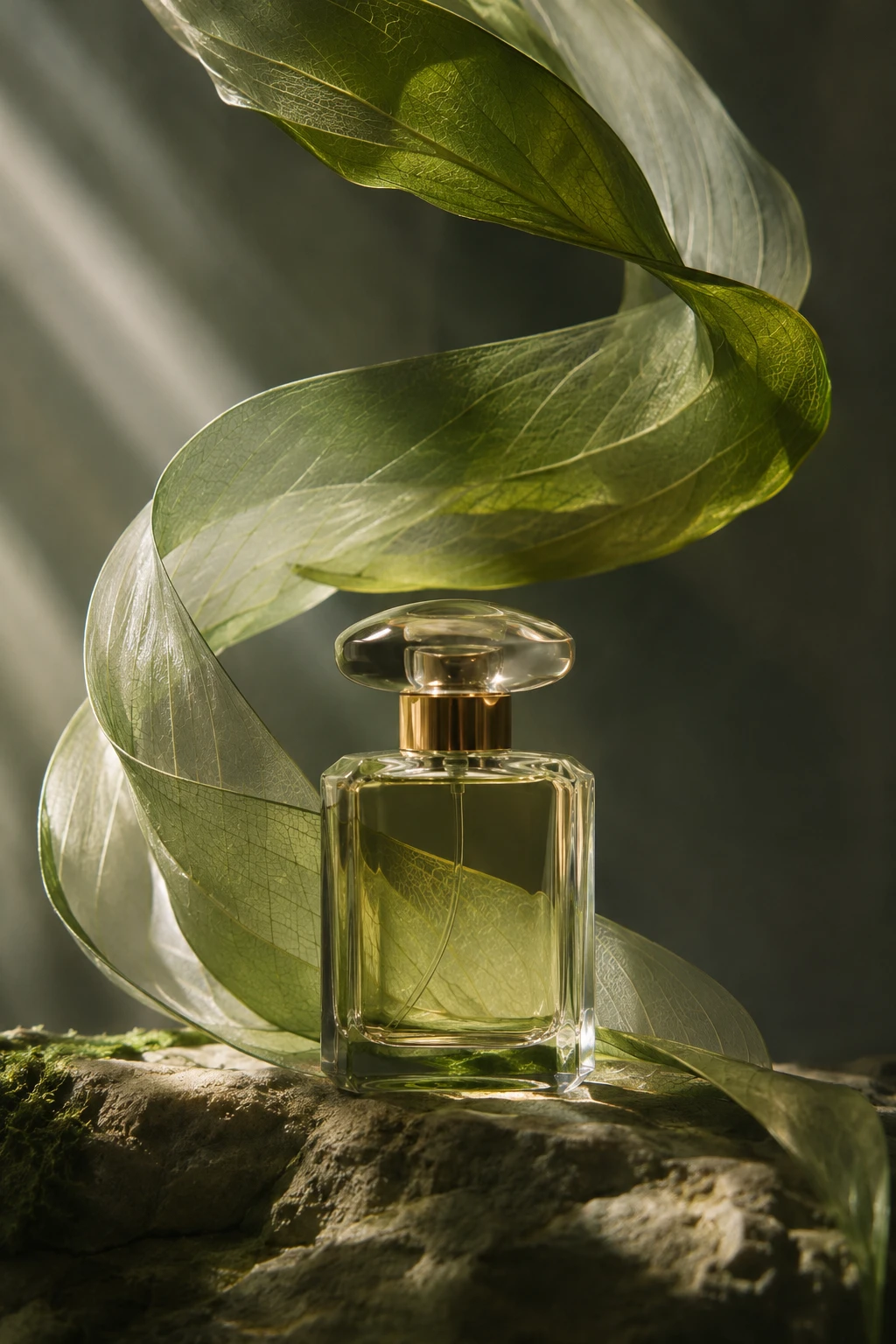
Green unfolding
A translucent leaf sculpture spirals upward. Its surface repeats one green tone at several levels of brightness, making the change feel continuous. An open patch of surface can hold the composition together. Let the strongest color or texture appear once more in a small detail, leaving room for the bottle to stand out. A slightly quieter background brings the shape of the bottle into view.
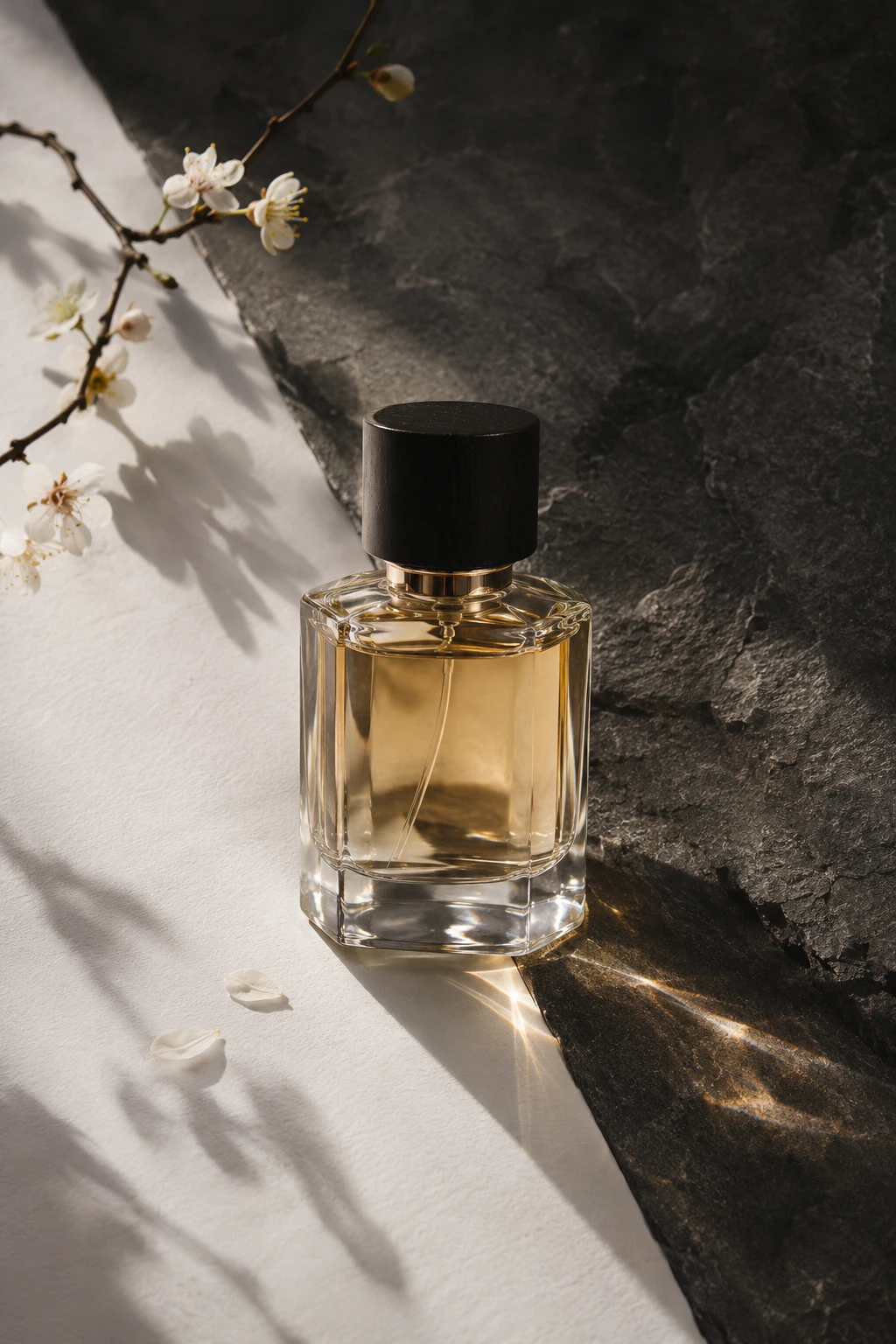
A sharp edge
White paper meets charcoal stone at a sharp edge. The strong boundary makes the image feel decisive while the glass softens the transition through reflection. Look for the smallest detail that changes the character of the frame. Give it enough space to stay visible and let the rest of the arrangement carry the quieter tones. The uneven light gives the scene a sense of depth at the edges.
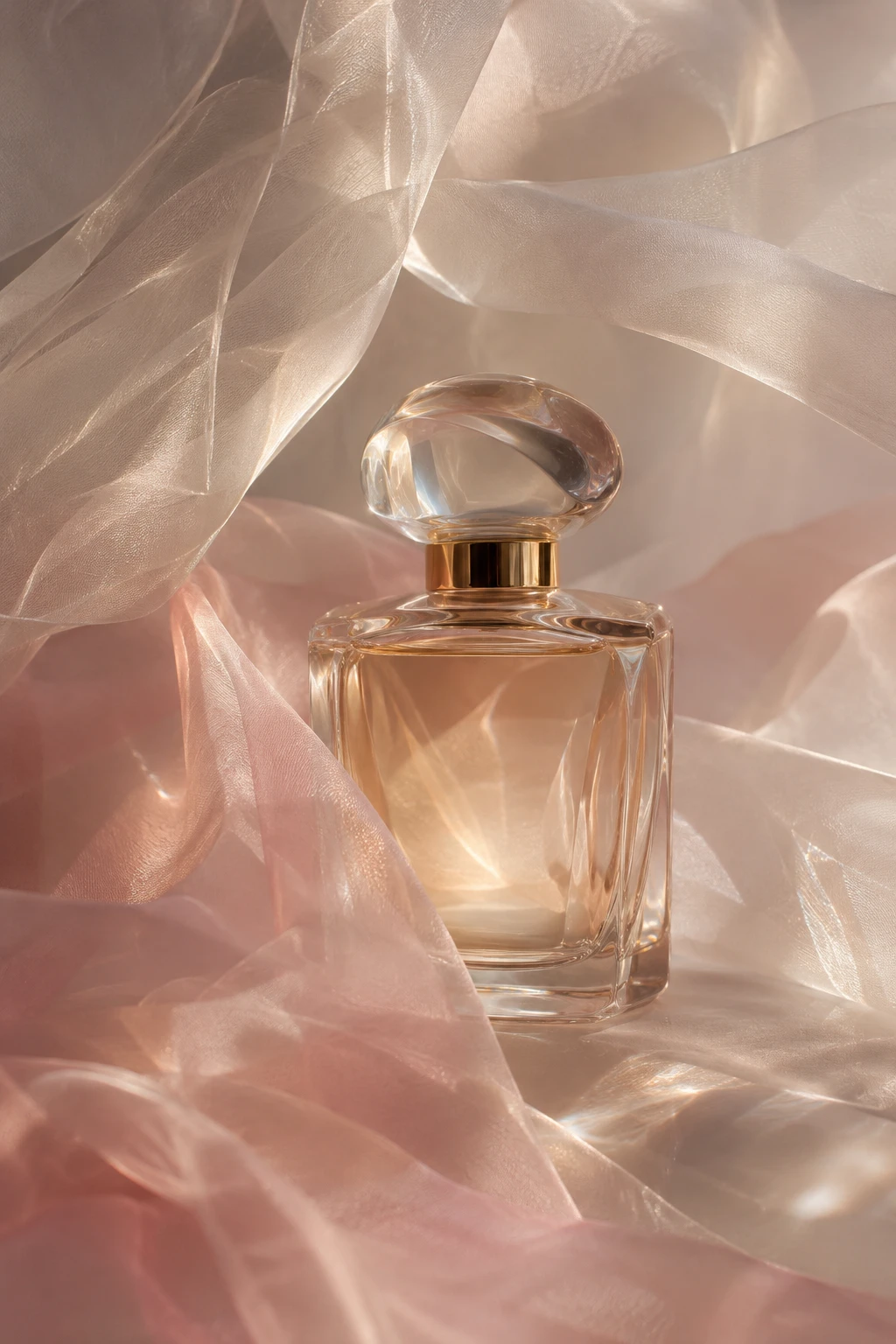
Soft diffusion
Layers of translucent organza let the outline of the bottle soften gradually. The change in clarity gives the eye a way to follow the imagined diffusion. Let the light come in from one side so the forms keep their depth. A soft shadow along the base is enough to connect the objects to the surface. A softer area of color balances the more precise outline of the glass.
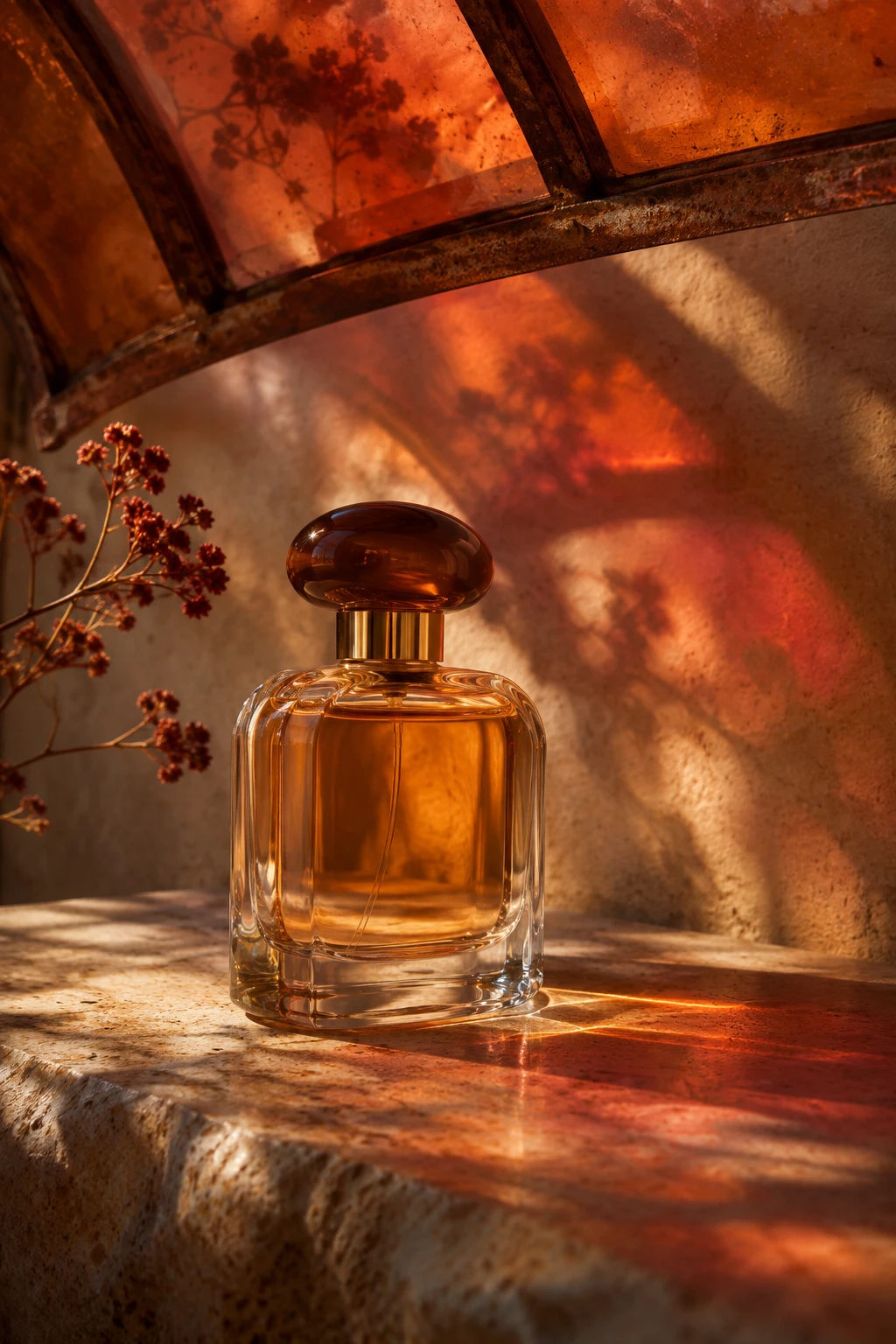
Warmth under glass
A rust glass canopy brings warmth to the scene through a colored shadow. Light arrives as a pale shape and leaves a denser color on the surface. The image works best when the eye can move between two points of interest. Use the brightest reflection sparingly so the softer material still has its own presence. The surrounding surface stays visible, giving the bottle a sense of scale.
Lingering trace
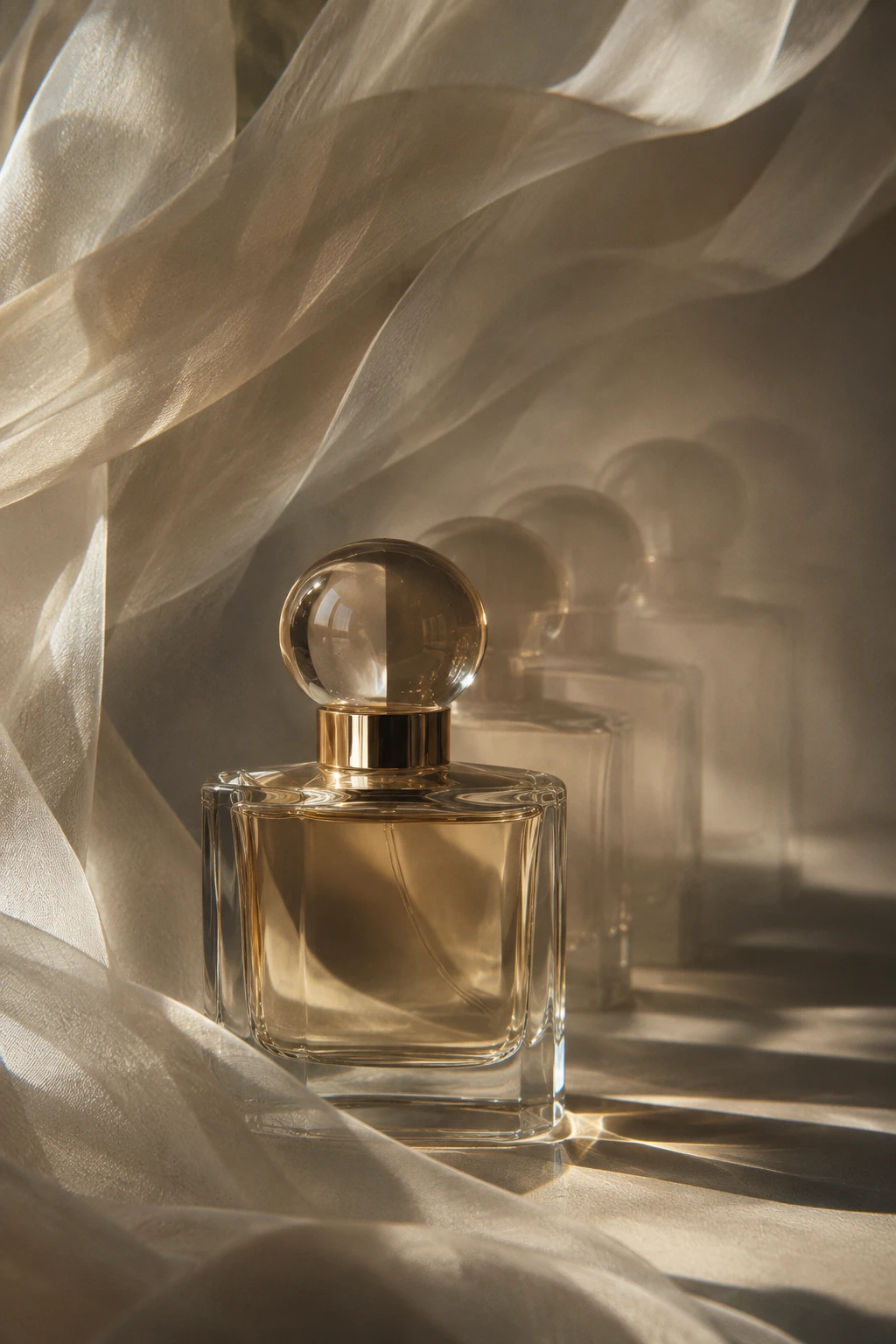
Repeated silk shadows grow faint as they move away from the bottle. The trace remains readable for a moment before it becomes part of the background. Keep a little distance between the main objects. That interval makes the differences in scale, color and surface easier to see, especially when the image is viewed small. A few restrained details are enough to make the arrangement feel complete.
Space between notes
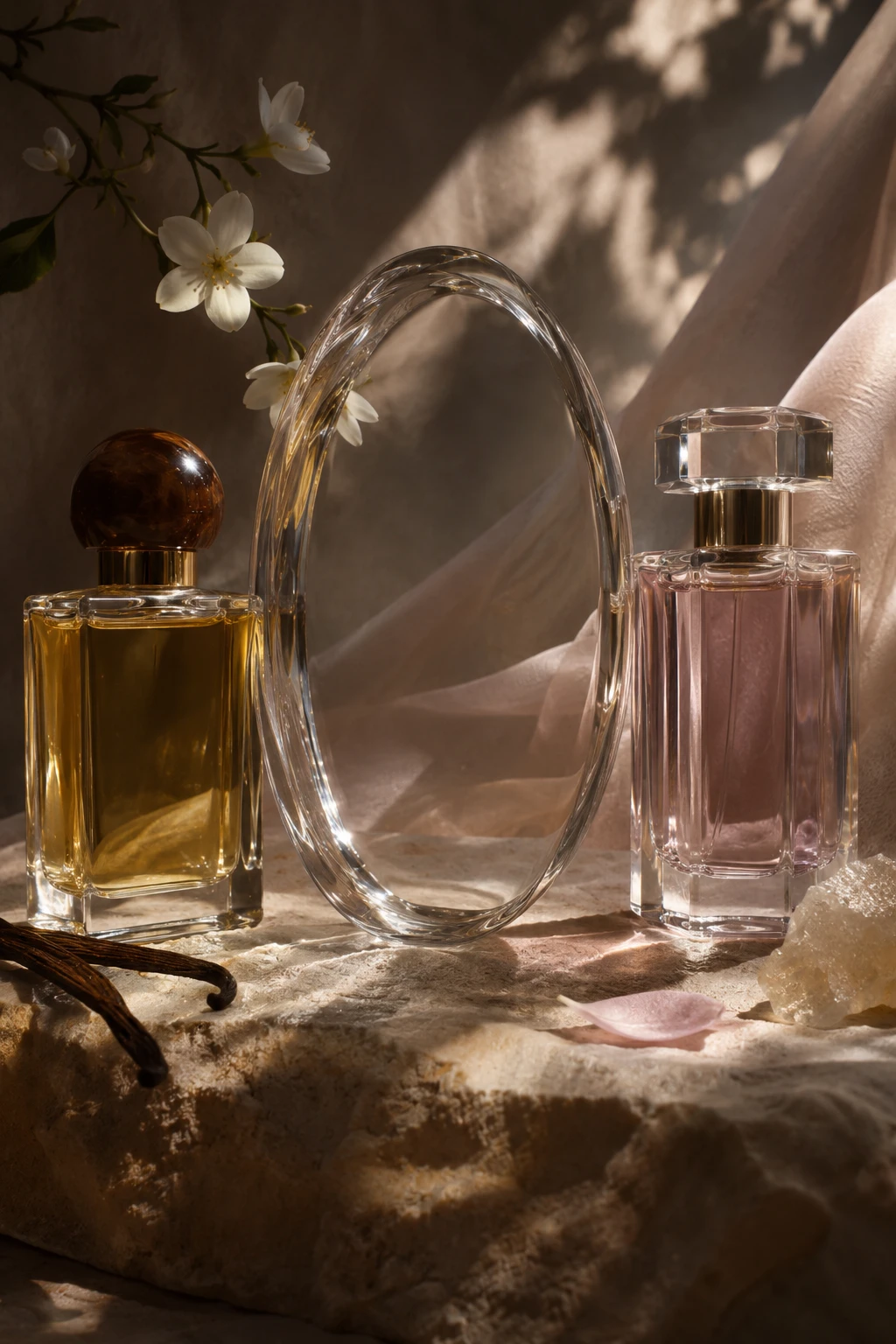
Two bottles frame a hollow glass oval. The opening gives the empty part of the image a definite shape and makes the interval feel intentional. Use the remaining space to show where the light falls. A quieter area at one edge makes the more detailed part of the photograph feel deliberate. The quietest part of the frame leaves some room to imagine the scent.
Think of one quality you remember about a perfume. A movement or a temperature can be as good a starting point for describing it as the name of a note.
IMAGE CREDIT
Original AI-generated imagery by YEUNORY. These visual concepts depict imagined bottles, interiors and objects; they are not photographs of products for sale.