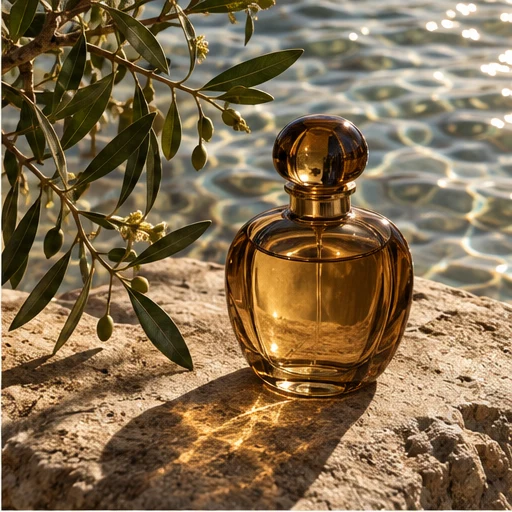
Perfume layering begins with a question: what would you like to change about a scent you already enjoy? Perhaps a floral feels too sheer, or a favourite woody fragrance needs a brighter opening. Jo Malone London describes pairing as a way to personalise fragrance and suggests beginning with two scents. Our ten combinations take that general idea into an imagined visual notebook; they are editorial hypotheses, not tested product recipes or promises about performance. A note name does not describe an entire formula, so two perfumes labelled vanilla can behave very differently. Start with separate blotters, compare them together, and use a light hand if you decide to wear the pair. Follow each product's directions, avoid irritated skin, and stop if discomfort occurs.
Vanilla + Musk
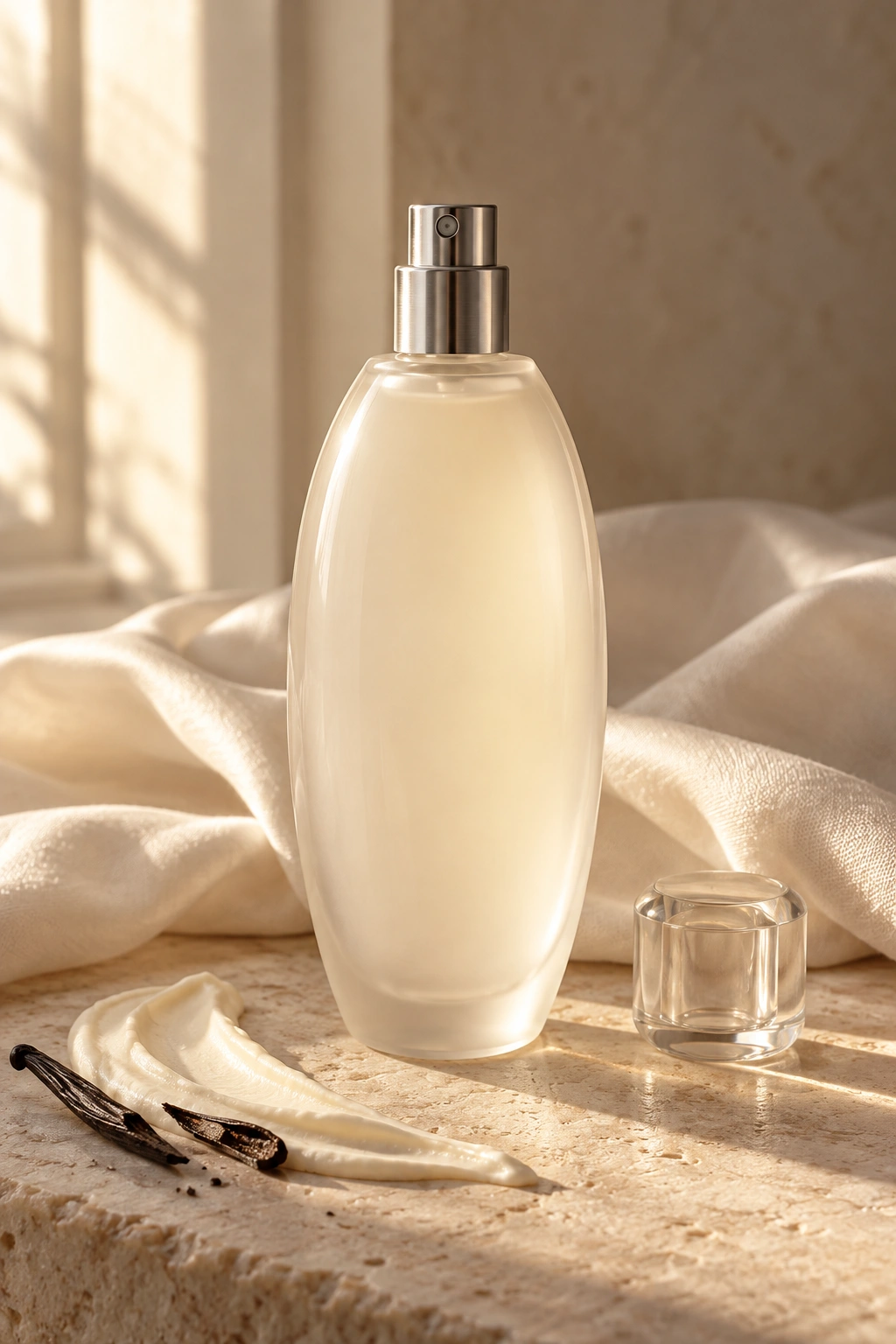
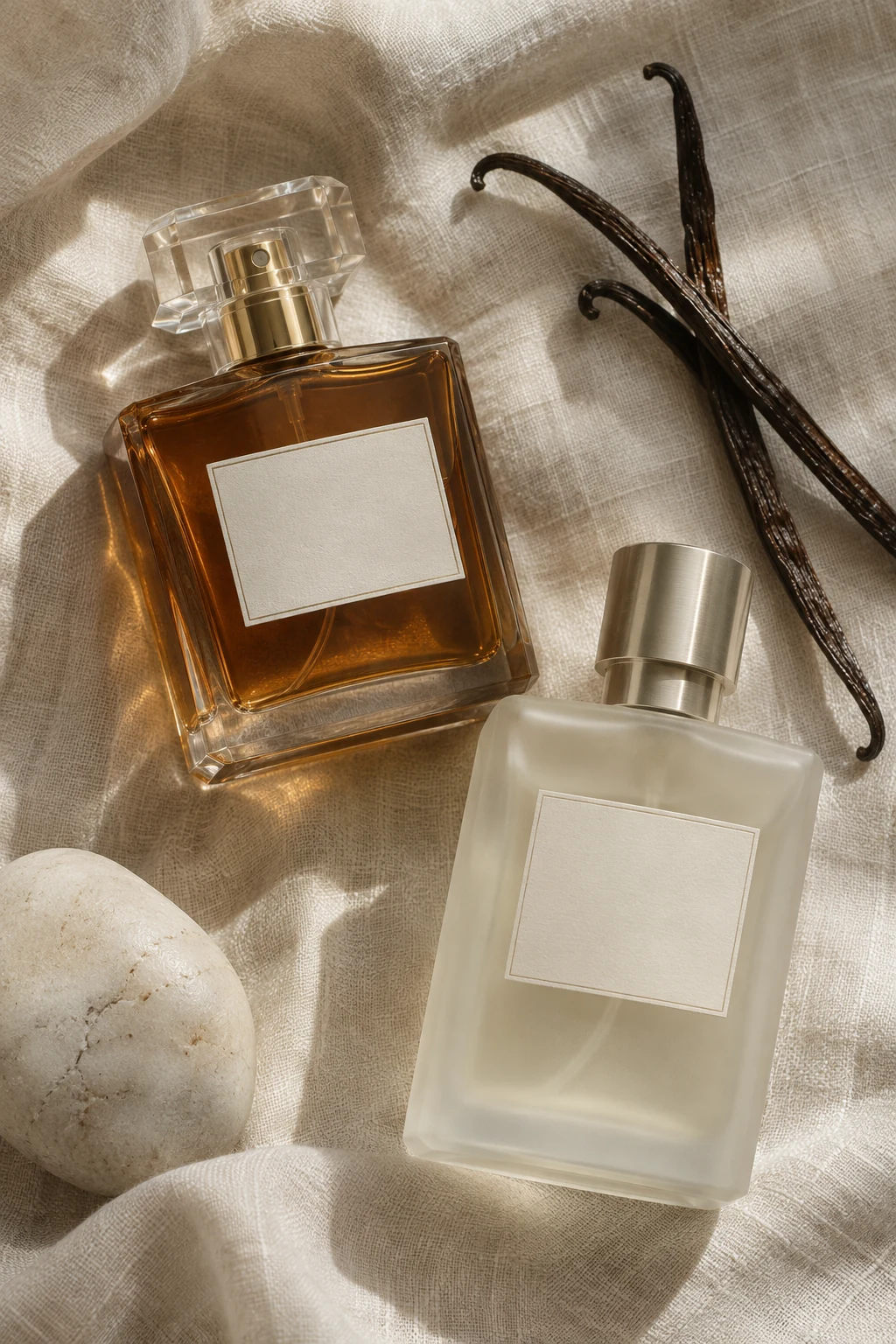
Vanilla and musk suggest a soft starting point, especially when neither perfume is already very dense. Imagine the vanilla as warmth and the musk as space around it, rather than expecting a guaranteed sweeter result. Compare the perfumes on separate blotters first, then bring the strips together. If the pair feels heavy, reduce one part rather than adding a third fragrance. The linen and pale stone here visualise softness; they are not ingredients.
Rose + Wood
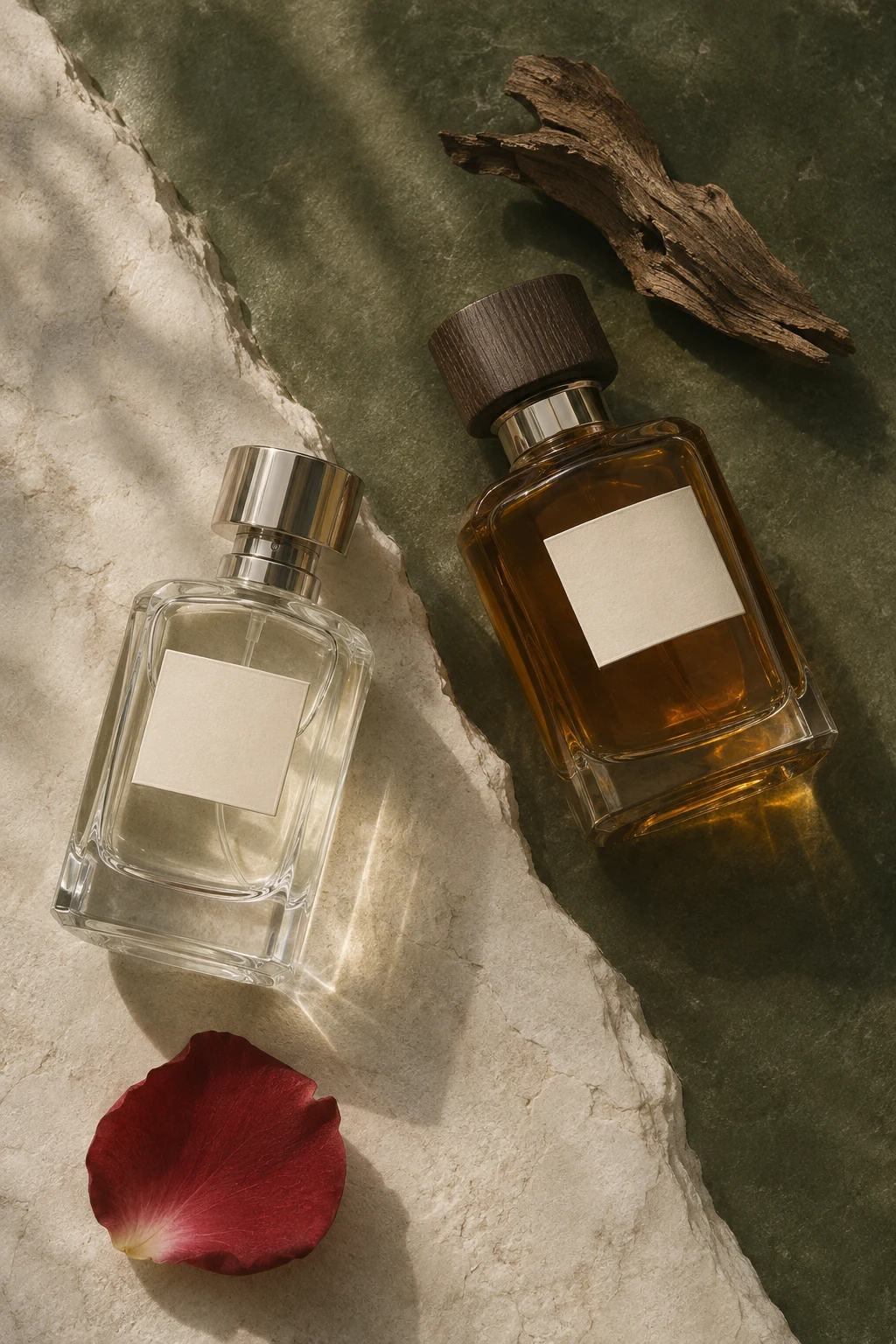
Rose can be fresh, powdery, jammy or dark, so the word alone will not tell you how this pairing behaves. A restrained woody fragrance is one way to explore a drier setting for a floral you know well. Smell the pair after the first bright notes have softened, and notice whether the rose still feels distinct. In this image, a real-looking rose and cedar offcut are visual shorthand for the two directions.
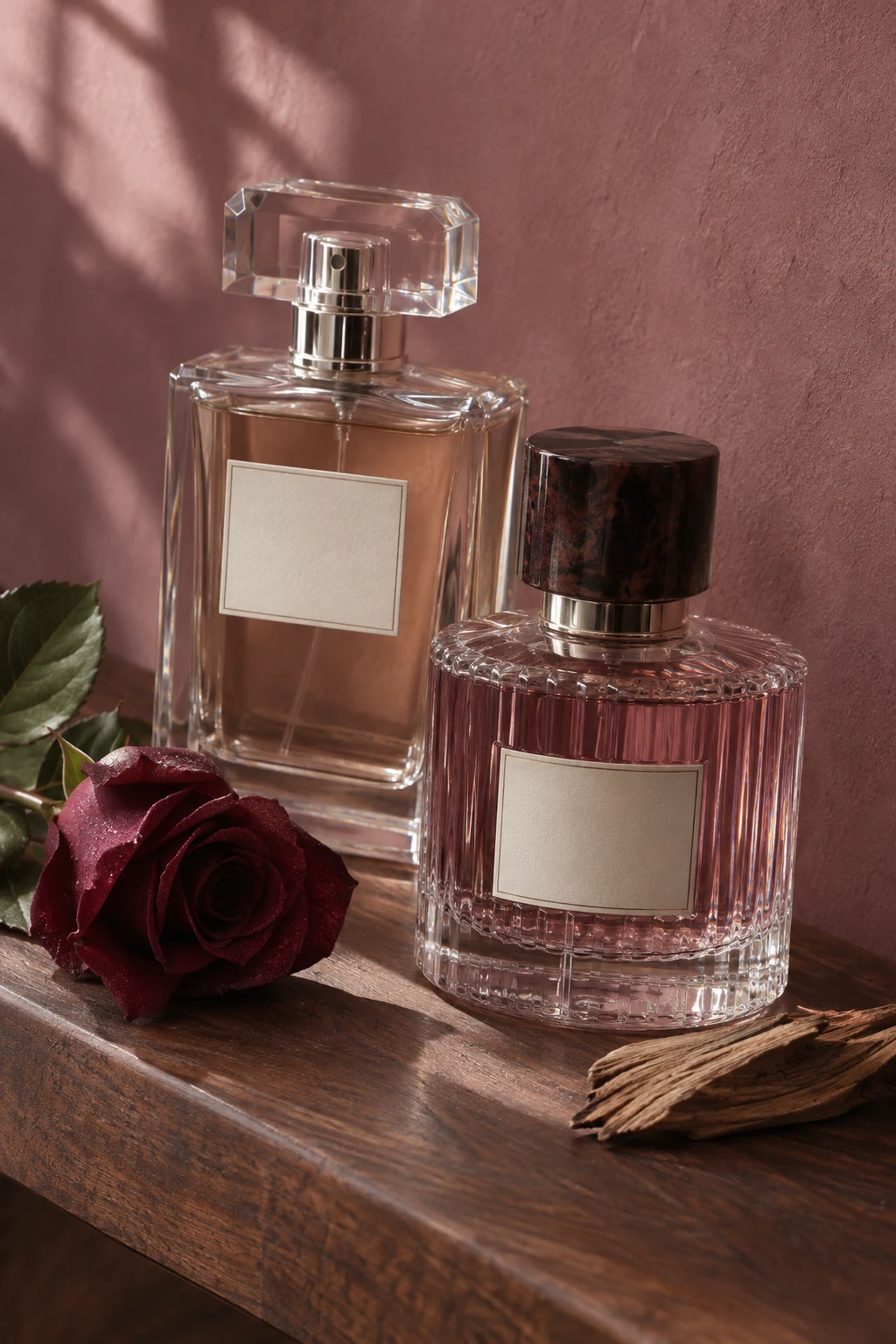
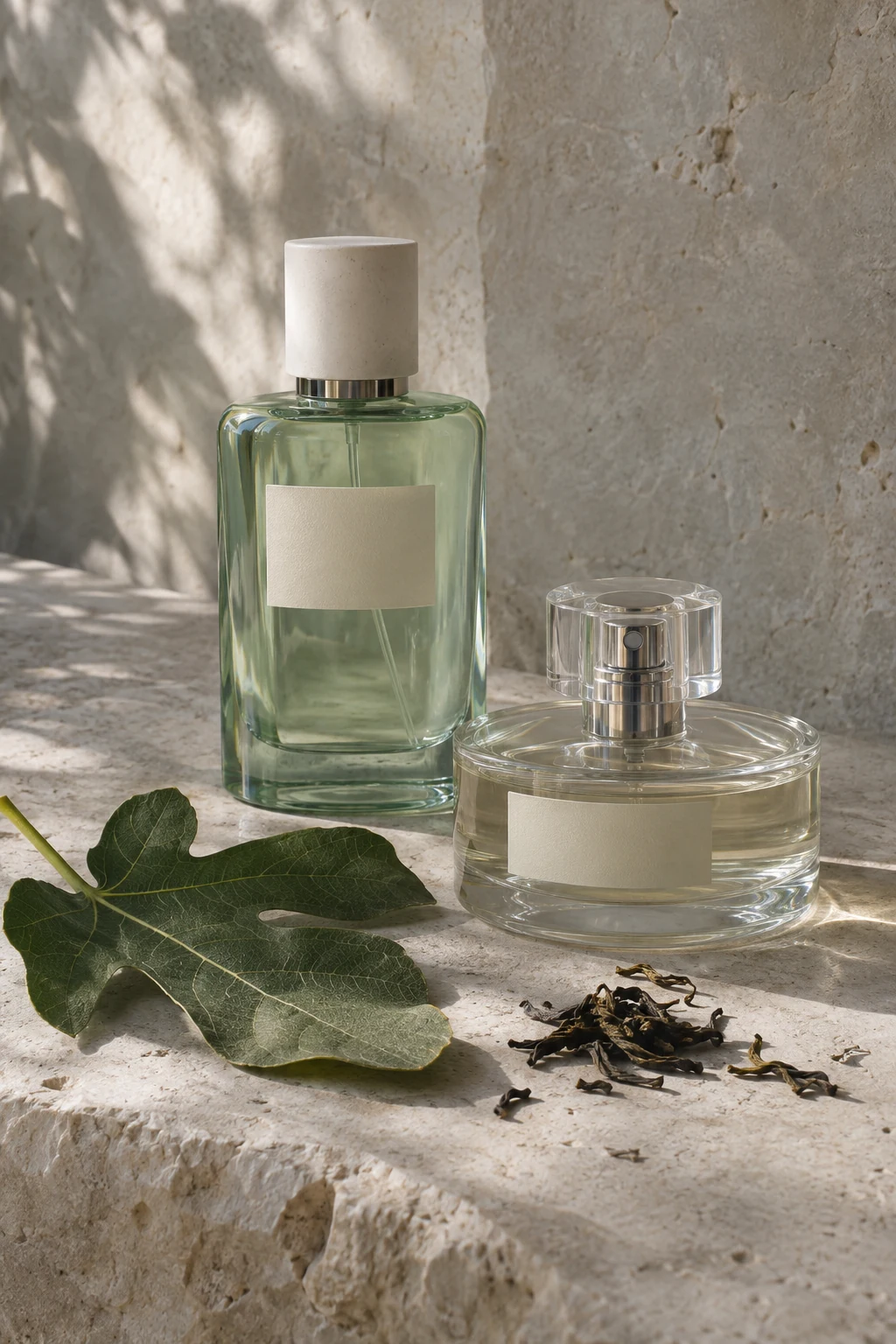
Fig + Tea
Fig and tea make an appealing study in green and dry textures. A fig perfume may suggest leaf, milky wood or ripe fruit, while a tea fragrance can range from airy to smoky. Begin with the less forceful perfume as the focus and add only a little of the other when testing. This imagined scene uses a leaf and dry tea to make the contrast visible; the combination has not been evaluated on skin.
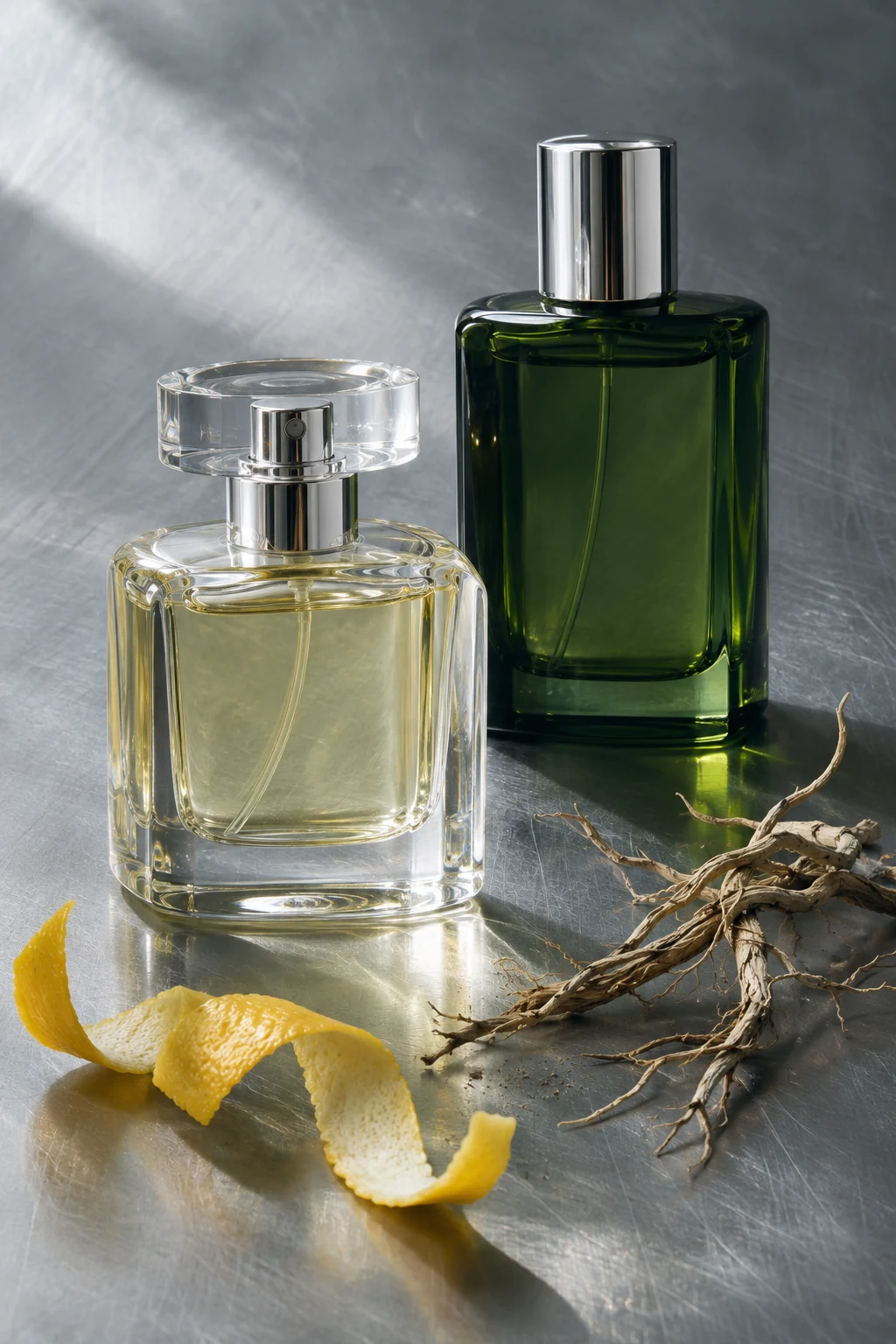
Bergamot + Vetiver
A bright citrus direction beside a dry grassy wood can feel like a change in temperature. That is the idea behind bergamot and vetiver, though the full formulas matter more than the headline notes. Check the opening and return later instead of judging only the first minute. Use finished fragrances according to their labels; the peel and roots in this photograph are styling symbols, not a suggestion to apply raw citrus or botanical material.
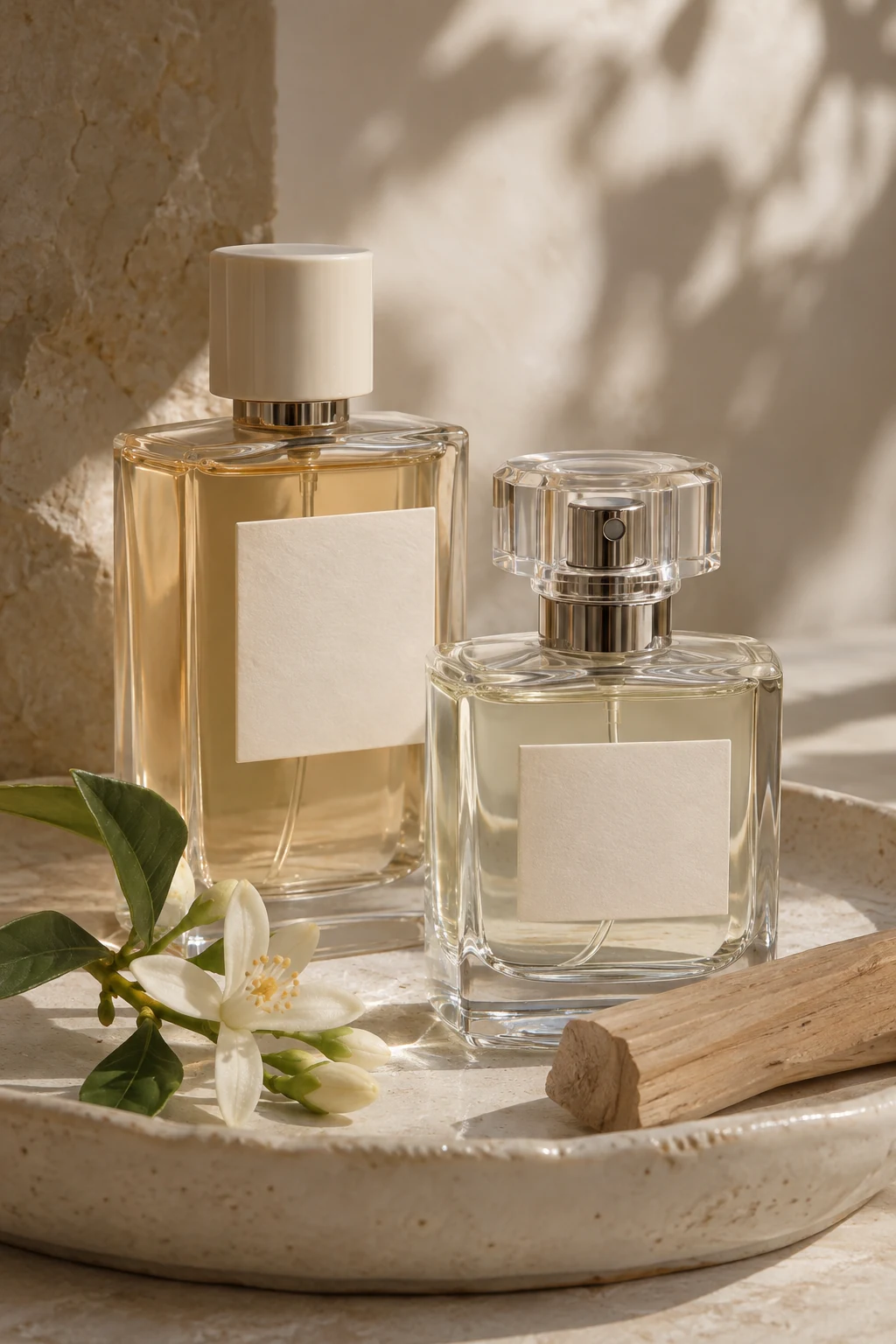
Orange Blossom + Sandalwood
Orange blossom and sandalwood offer a floral-and-wood starting point with room for softness. If the floral is already rich or the woody perfume already sweet, the pair may feel much fuller than the names suggest. Try smelling one blotter slightly farther away to explore a gentler balance before wearing anything. The blossom and pale wood in this imagined composition describe an editorial direction, not the actual ingredients or proportions of a finished product.
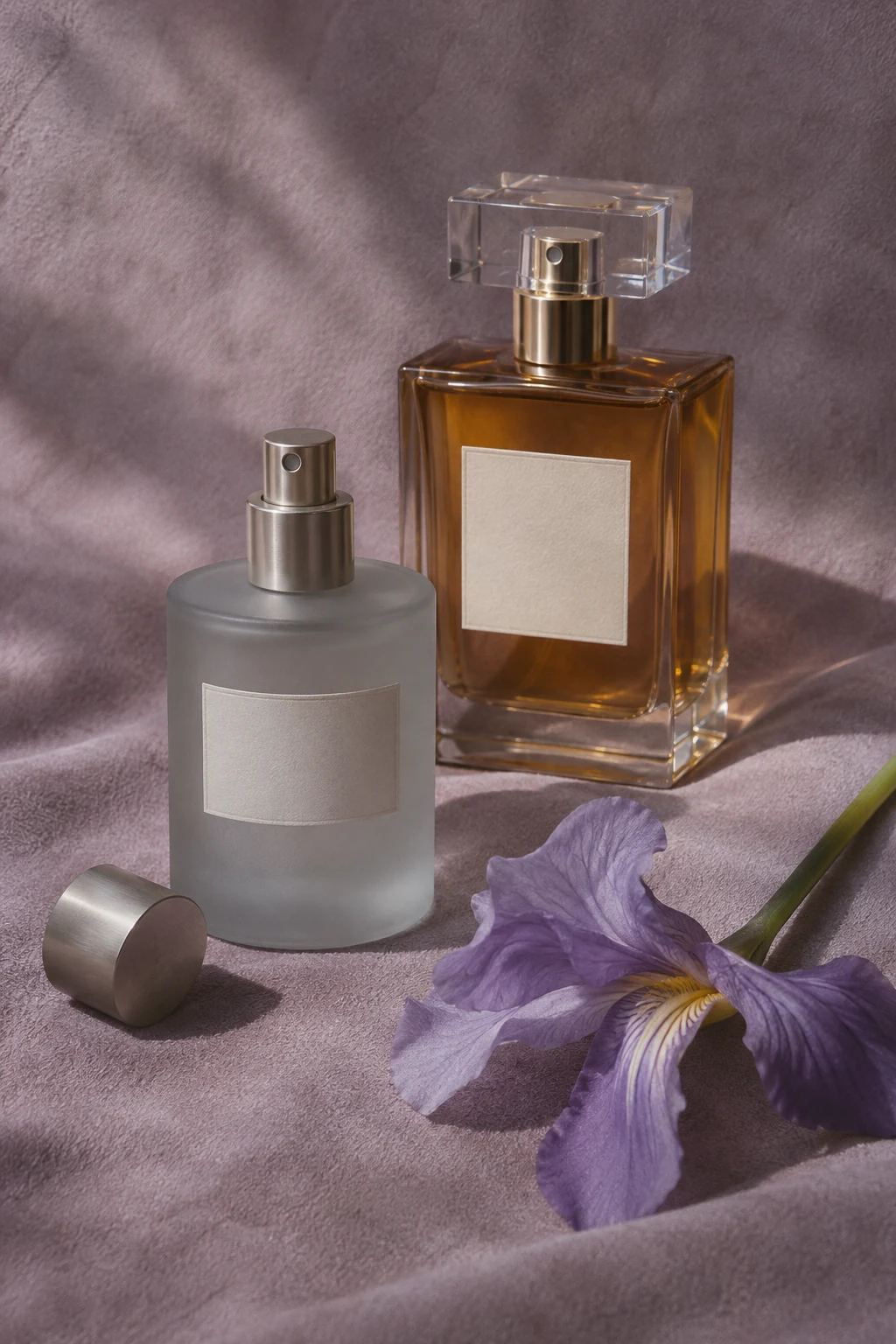
Iris + Suede
Iris and suede suggest a powdery, tactile pairing rather than a literal flower-and-leather recipe. Both effects can already be present in complex perfumes, making it useful to check for overlap before layering. Compare each scent alone and ask whether the combination adds something you enjoy. If one disappears, a smaller amount of the stronger fragrance may leave more room. Lilac suede supplies the visual texture here; the bottles are entirely fictional.
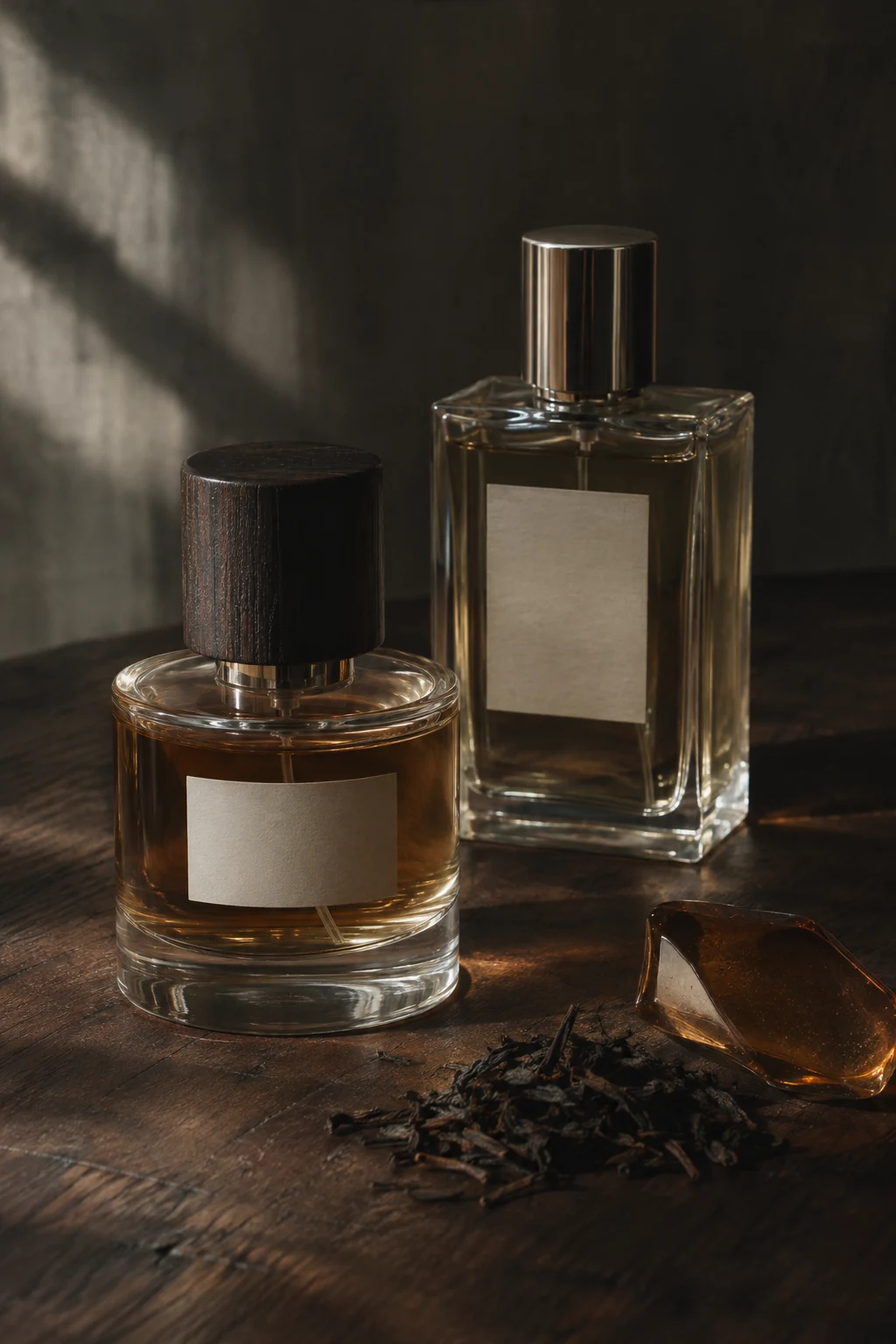
Black Tea + Amber
Black tea and amber imagine dryness beside warmth. Tea effects can be smoky or delicate, and an amber perfume may already contain several sweet or resinous facets. Begin with a modest test instead of assuming both need equal emphasis. Revisit the blotters later to see what remains when the opening has passed. The dark oak and amber-coloured glass in this study visualise the contrast without claiming to reveal any perfume's formula.
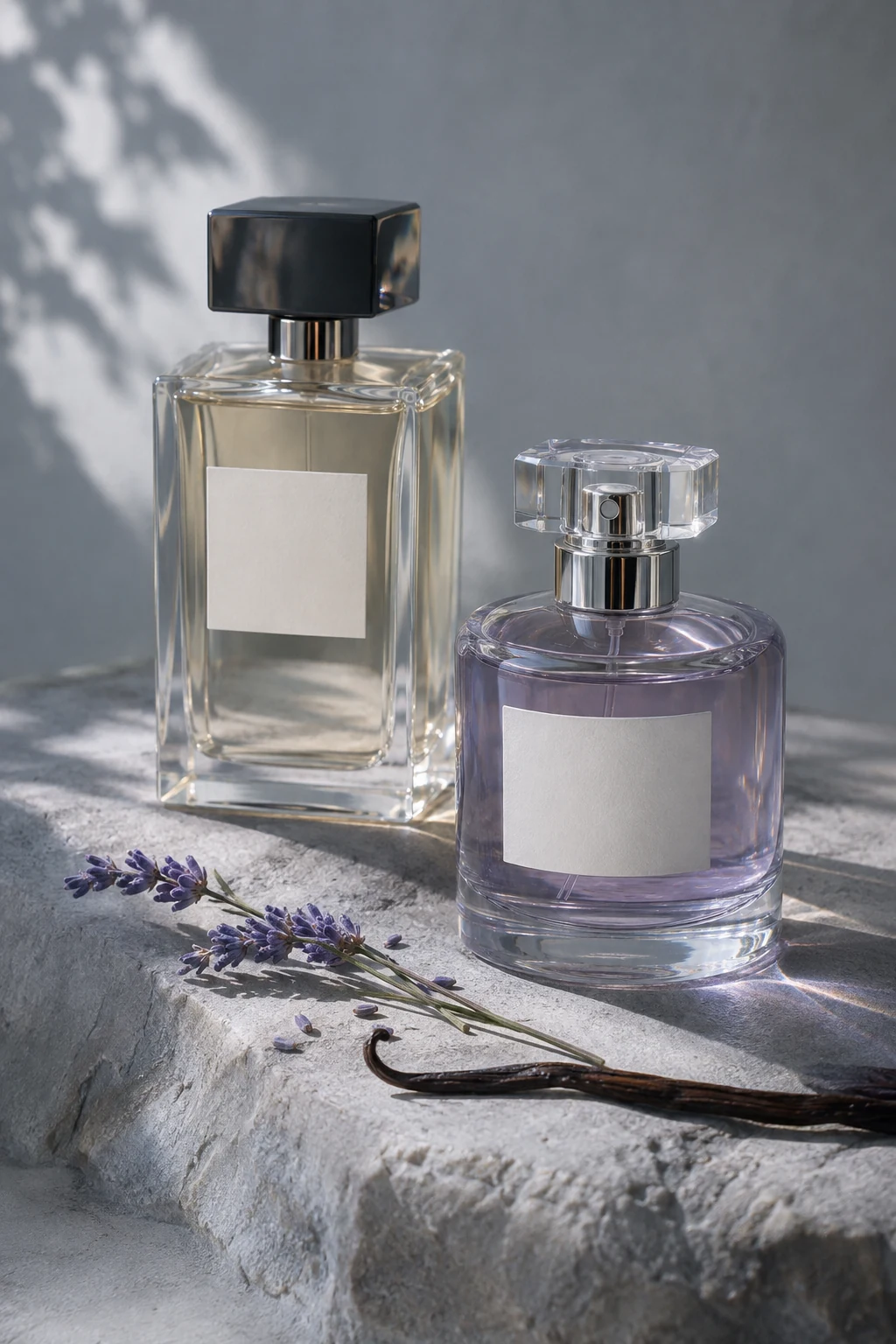
Lavender + Vanilla
Lavender and vanilla can be explored as an aromatic note beside a warmer one. Choose the perfume whose character you want to keep, then consider the other as an accent. The pair could become softer, sweeter or simply busier depending on the formulas, so treat the idea as a question to test. This scene uses dry botanical props to explain the direction; it makes no claim that the combination improves sleep, relaxation or wellbeing.
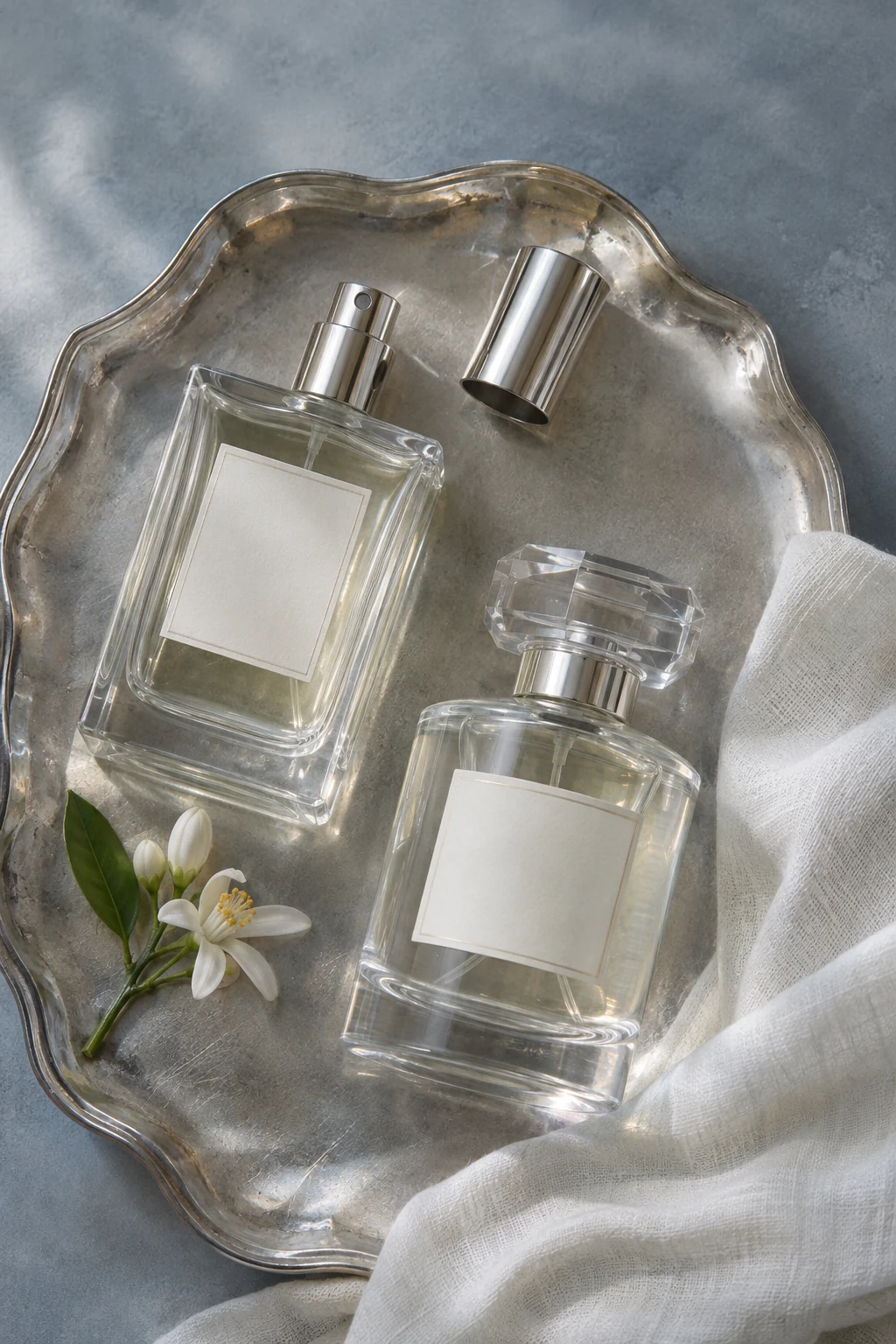
Neroli + Clean Musk
Neroli and a clean musk direction suggest a light floral study, but clean is a scent description rather than a safety or ingredient claim. Musk effects vary widely, and a fragrance that seems quiet at first can still dominate a combination later. Keep the first test small and return to it after a break. The white cotton in this photograph represents an airy texture; the pairing is not a recommendation to spray fragrance onto fabric.
Cedar + Soft Spice
Cedar and soft spice offer a drier alternative to very sweet layering ideas. Cardamom is the visual cue here, but the effect will depend on the spice character already built into each perfume. Smell the combination before increasing the amount, since adding more may simply obscure the detail you liked. Keep raw spice away from the application process. This is a symbolic still life and a note-pairing prompt, not a tested blend or formulation guide.
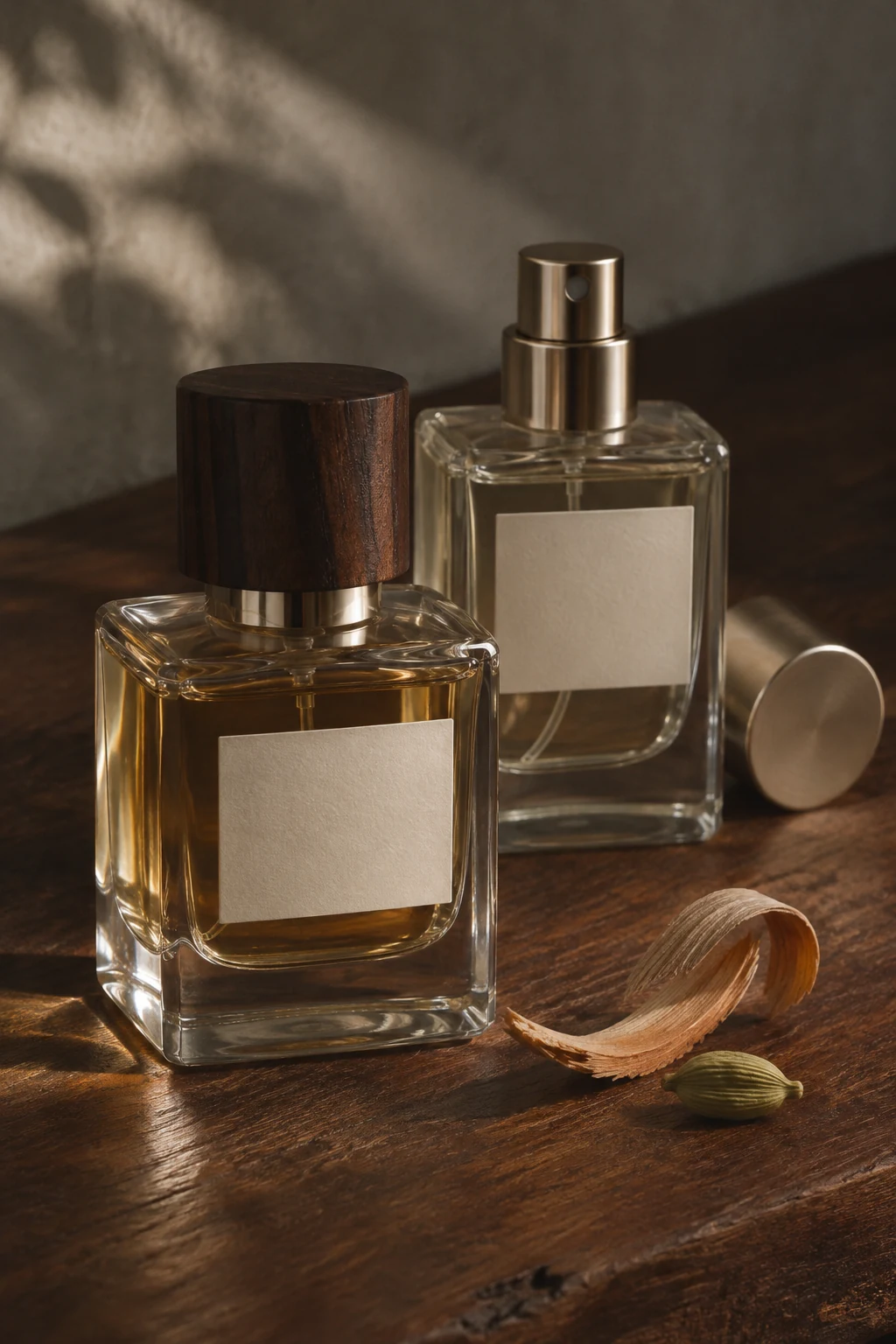
Keep a short note of the perfumes, the amounts and what you noticed after the opening faded. A combination is worth keeping because you enjoy it, not because it fits a rule. These images show fictional bottles and symbolic note materials; do not mix raw ingredients or pour finished perfumes into one bottle.
IMAGE CREDIT
Original AI-generated imagery by YEUNORY. These visual concepts depict imagined bottles, interiors and objects; they are not photographs of products for sale.